
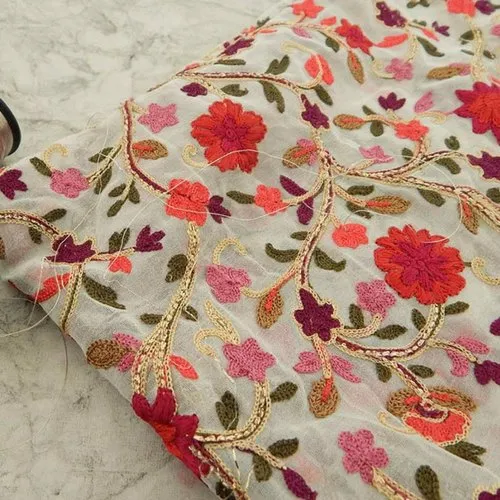
1. Idea and topic: Begin by establishing a distinct idea or topic for your design. Nature, cultural components, abstract art, or even text-based designs could serve as its inspiration. Understanding the theme aids in directing stitch kinds, color selections, and general style.
2. Selecting Fabrics: Depending on the type of embroidery, different fabrics work better. For hand embroidery, cotton, linen, and silk are common materials; for machine embroidery, denim or canvas may be utilized. When designing, take into account the weight and texture of the fabric.
3. Design Software/Tools: You can generate or scan your design for machine embroidery by utilizing programs like Adobe Illustrator, CorelDRAW, or specialized embroidery software (like Wilcom or Hatch). The first step in hand stitching is to draw up your design.
4. scale and Position: Consider the scale of the design in relation to the space you’re working with, such as a wall hanging, pillow, or shirt. Additionally, placement is important; for a more dynamic appearance, center or off-center your design.
5.Testing the pattern: To check how the colors, stitches, and textures work out, try your pattern on a piece of fabric if you can. This can assist you in modifying your strategy prior to beginning the finished product.
6.Detailing: Little features like highlights, shadows, or complex patterns can make embroidery look better. Your design can be improved by layering stitches or combining several thread types (such as metallic or variegated threads).
7. Layering and Dimension: You can give your design more depth by employing different stitch lengths or layering threads. To make specific parts of your design stand out or appear three-dimensional, for instance, you can employ raised stitches like couching or bullion knots.
8. Use of Sequins and Beads: You can enhance your embroidered design by adding sequins, beads, or other embellishments. These can be included as accents to improve the design’s visual appeal and add movement, texture, and shine.
9. Adding Typography: Select fonts that complement needlework if you like to add text. Cursive patterns or block lettering are frequently easier to read and embroider. Note that some complex fonts might not translate well into thread format.