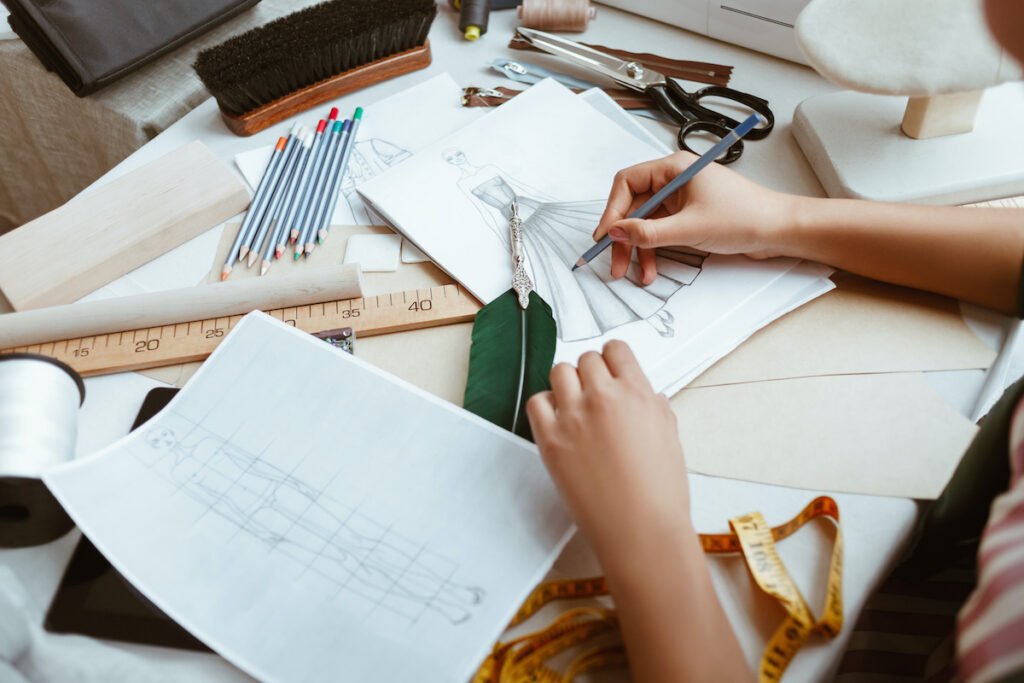
- Creative Vision:
The design of clothes is fueled by creativity, fusing style and utility to produce aestheticallypleasing apparel that appeals to a certain market or purpose.Fabric & Material Selection Selecting the appropriate fabric and materials is the first step in the design process. This choice affects the overall style, texture, and durability of the garment.
2.Trend Analysis:
To maintain their designs current and stylish in a market that is always changing, designers closely monitor consumer tastes and current fashion trends.
3. Pattern Making:
Technical patterns are created from the design. In order to ensure appropriate fit, proportion, and construction, this entails creating the garment’s blueprint. Selecting colors and prints is a crucial step in the design process. Designers take into account the season, theme, and market demands when selecting combinations that appeal to the target audience.
4. Prototyping:
The original design serves as the basis for the creation of a prototype or sample garment. Prior to mass manufacturing, this aids in fitting, comfort, and attractiveness testing. Attention to Detail: To guarantee that the clothing is well-made and polished, designers pay close attention to minute details like stitching, trimmings, and finishing methods.
5. Customization:
Designers provide tailored styles for exclusive collections or individualized garments to satisfy certain client wants.Sustainability: By utilizing eco-friendly textiles, waste-reducing designs, and moral production methods, clothing design is increasingly emphasizing sustainability.
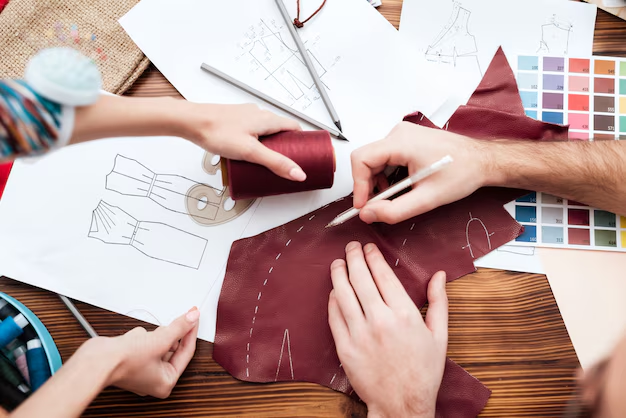
Designing Clothes
1. Motivation and Idea Generation:
Getting ideas is the first step in clothing design. Nature, art, culture, or international fashion trends can all contribute to this.
Designers use mood boards, sketches, and color palettes that reflect the intended subject or narrative to conceptualize a collection or a single item of clothing.
2. Selection of Fabric and Material:
An important factor in the design process is the fabric selection. Fabrics have an impact on the garment’s comfort and utility in addition to how it looks.
Texture, weight, longevity, and the materials’ capacity to maintain shape or flow are among factors that designers consider when choosing materials.
3. Design Sketching:
Designers start by drawing their concepts on paper or in a computer. Important aspects including shapes, proportions, design components (such as collars and sleeves), and ornamental embellishments are all included in the sketches.